
Unveiling the Secrets Behind the Mona Lisa Painting: Insights into Leonardo da Vinci’s Masterpiece
The Mona Lisa, painted by Leonardo da Vinci over 500 years ago, remains one of the most famous paintings in the world. Its lasting appeal comes from many layers of mystery, from the identity of the woman to the techniques used by da Vinci. The secrets behind the Mona Lisa reveal a blend of art, science, and history that continues to fascinate experts and viewers alike.
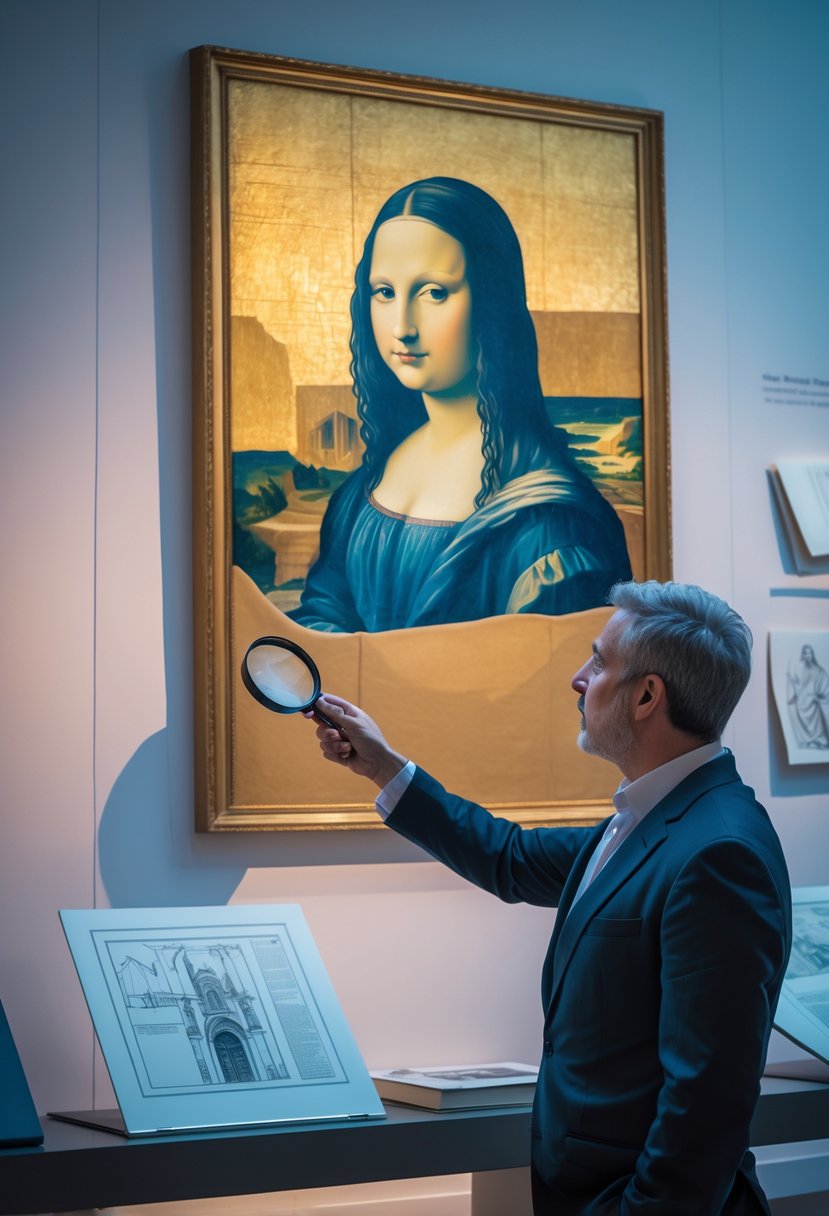
This painting is known for its subtle details, especially the mysterious smile that seems to change when seen from different angles. Scientists and art historians still study the artwork to uncover hidden features, such as how da Vinci might have created the shadowy effects and even the presence of previously unseen elements like her eyebrows.
The Mona Lisa’s story goes beyond the canvas. Its journey through time, from theft to careful preservation, and its display at the Louvre in Paris have made it a global cultural icon. Understanding these secrets helps illustrate why this masterpiece remains so important today.
Key Takeways
- The Mona Lisa’s meaning is deeply tied to Leonardo da Vinci’s innovative painting techniques.
- Its enigmatic smile continues to spark curiosity and scientific study.
- The painting’s history and preservation have helped secure its legendary status worldwide.
Origins and Identity of the Mona Lisa Painting
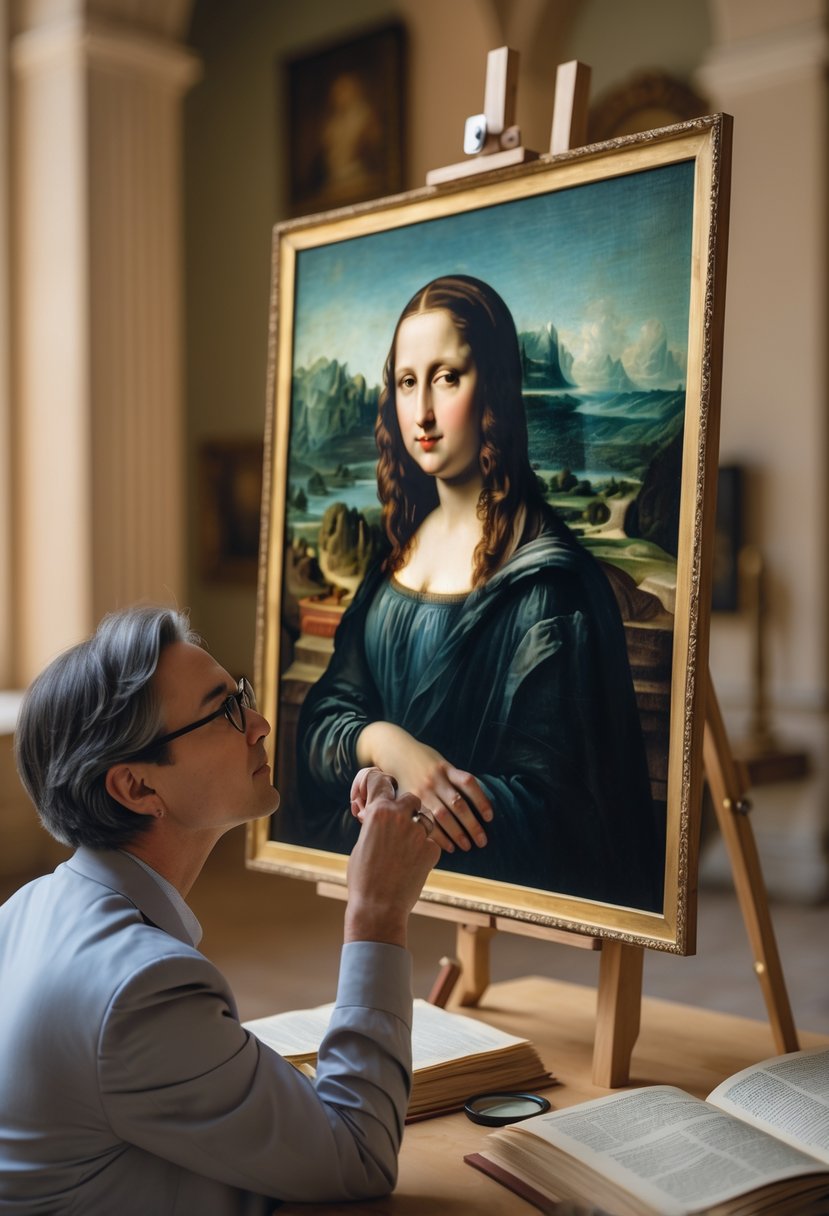
The Mona Lisa’s creation is deeply tied to the Italian Renaissance and the skilled hand of Leonardo da Vinci. Her identity has sparked debate for centuries, with strong links to a real woman named Lisa Gherardini. The story behind the painting combines artistic mastery and historical mystery.
Leonardo da Vinci and the Creation
Leonardo da Vinci began painting the Mona Lisa around 1503. He worked on it over many years, refining details and using innovative techniques like sfumato, which blends colors smoothly without harsh lines. This helped give the painting its lifelike quality and the famous subtle smile.
The painting is done on a poplar wood panel, a common material during the Italian Renaissance. Leonardo never delivered the painting to the client’s home, suggesting he may have kept it with him until his death in 1519. This prolonged work on a single portrait shows his dedication and skill in portrait art.
La Gioconda: Unraveling Lisa Gherardini
Most scholars agree the woman is Lisa Gherardini, also called La Gioconda after her husband’s name, Francesco del Giocondo. She was a noblewoman living in Florence in the early 1500s. The portrait was likely commissioned to celebrate a special event, such as her wedding or the birth of a child.
Lisa Gherardini’s real identity was not confirmed until centuries later, based on historical documents and research. She lived a regular life but became immortalized through Leonardo’s brush. Her calm and gentle expression has made the painting famous worldwide, and it remains one of the best-known images from the Italian Renaissance.
The Mysterious Identity Debate
Despite these findings, the identity of the Mona Lisa is still debated. Some claim she might have been a member of Leonardo’s family, a secret lover, or even a symbolic figure rather than a real person. Others have suggested she could have been a courtesan, reflecting the social complexities of Renaissance Italy.
This uncertainty adds to the painting’s allure, making it a subject of endless fascination. The mystery fuels ongoing research and speculation, but no other identity has been as widely accepted as Lisa Gherardini’s. Her connection to the painting ties together art, history, and mystery in a unique way.
For more on Leonardo’s work and Lisa Gherardini’s identity, see the detailed exploration of the Mona Lisa’s true identity.
Artistic Techniques and Innovations
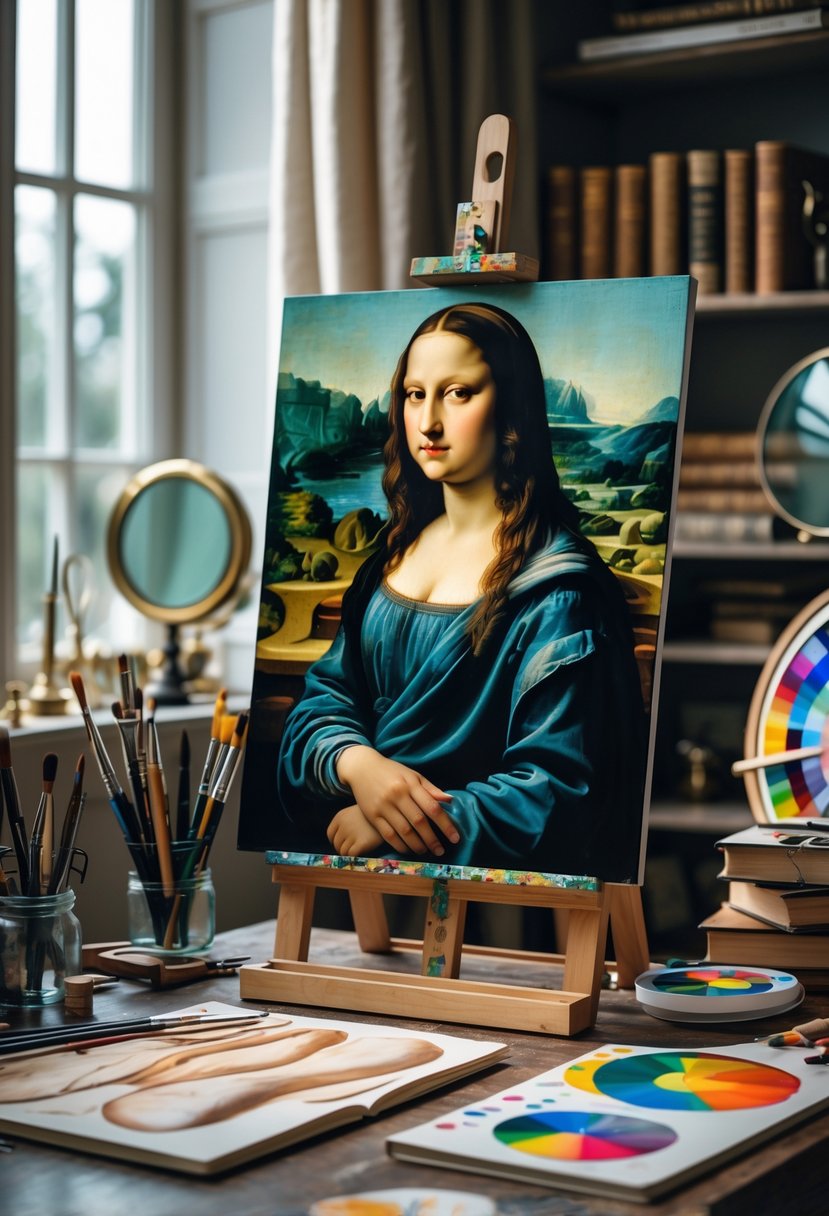
The Mona Lisa showcases advanced painting methods and materials that highlight Leonardo da Vinci’s attention to detail and mastery of his craft. The techniques he used give the portrait its unique softness, depth, and lasting durability.
The Sfumato Technique Explained
Leonardo used the sfumato technique to create smooth, subtle transitions between colors and tones. This method blurs sharp edges, producing a smoky effect that adds softness to facial features.
- Sfumato* helps the viewer see the Mona Lisa’s enigmatic smile without harsh lines.
- It mimics how light reflects on skin, creating a natural appearance.
- This was achieved by applying many thin layers of paint mixed with lead oxide powder, which helped blend edges seamlessly.
This technique was innovative for its time and shows Leonardo’s deep understanding of light and shadow. It remains central to the painting’s charm and realism.
Use of Poplar Wood Panel and Materials
Leonardo painted the Mona Lisa on a poplar wood panel, a common but carefully chosen base for art in the Renaissance. Poplar wood offers a smooth surface, minimizing warping issues and providing a stable foundation.
The choice of materials was also important:
- The ground layer included plumbonacrite, a type of white lead compound, which helped the paint adhere better.
- Leonardo used lead oxide in his paints to enhance brightness and opacity.
These materials contributed to the painting’s longevity and texture, ensuring that colors stayed vibrant over centuries.
Anatomical Accuracy and Illusion of Depth
Leonardo’s study of human anatomy is evident in the Mona Lisa. The proportions of the face follow natural human measurements, showing his thorough knowledge.
He also created a strong illusion of depth by carefully layering tones and shadows:
- The face emerges gently from the background.
- Light and shadow mimic three-dimensional forms.
- Subtle hints of muscle and bone shape beneath the skin add realism.
This balance between structure and softness reflects Leonardo’s artistic genius and dedication to observing nature.
Durability, Texture, and Color
The painting’s texture is smooth but layered, a result of Leonardo’s careful brushwork and the materials chosen. The use of lead oxide and plumbonacrite gave the surface a slight sheen that enhances colors.
Over time, the poplar wood panel has held the painting well, protected by this layered technique. The colors appear muted but rich because of the thin glaze layers Leonardo applied, which influenced how light reflects off the surface.
Together, these factors ensure the Mona Lisa retains its visual impact and fine details despite its age.
The Mona Lisa’s Enigmatic Smile and Mysteries

The Mona Lisa’s smile has captured attention for centuries due to its subtle, shifting expression. Various features like her eyebrows, eyelashes, and even hidden details beneath the paint add layers of mystery. Modern scientific methods have also uncovered surprising insights that deepen the understanding of this masterpiece.
Emotions and the Mysterious Smile
The smile on the Mona Lisa’s face is neither fully cheerful nor clearly somber. It seems to change depending on the viewer’s angle and focus. This effect comes from Leonardo da Vinci’s skillful use of shadow and light, especially around her lips and eyes.
The smile is often described as “enigmatic” because it blends emotions in a way that looks different to different observers. Some see a faint grin linked to happiness, while others sense a hint of sadness or thoughtfulness. This emotional complexity is a key reason the painting remains captivating.
Eyebrows, Eyelashes, Veil, and Lace
Close inspection reveals that the Mona Lisa lacks visible eyebrows and eyelashes, which was uncommon for portraits of the time. Art historians believe these details might have faded or been removed during restoration. Her smooth forehead and slight shadow suggest she once had delicate eyebrows.
The veil over her hair and the lace on her dress add subtle texture to the portrait. These details show Leonardo’s careful attention to fabric and light effects. The transparent veil softly frames her face, while the lace demonstrates his ability to capture fine, realistic materials. These elements enhance the painting’s lifelike quality and might hold hidden symbolic meanings.
Hidden Secrets Revealed by Scientific Analysis
In recent years, scientists have used infrared imaging and other techniques to study the Mona Lisa beneath its surface. Pascal Cotte, a French engineer, developed a high-tech method called Layer Amplification Method (LAM) to examine the layers of paint in detail.
These studies showed that Leonardo made several changes during painting, such as adjustments to the smile and facial features. Infrared scans uncovered earlier versions of the eyebrows and different contours around her mouth. This reveals the artist’s evolving vision and offers clues about the creation process.
Scientific analysis continues to uncover unknown aspects of the painting, helping to solve some Mona Lisa secrets while confirming the complexity behind her mysterious smile. For more detailed insights, visit the page on hidden secrets revealed by scientific analysis.
Cultural Impact and Legendary Status
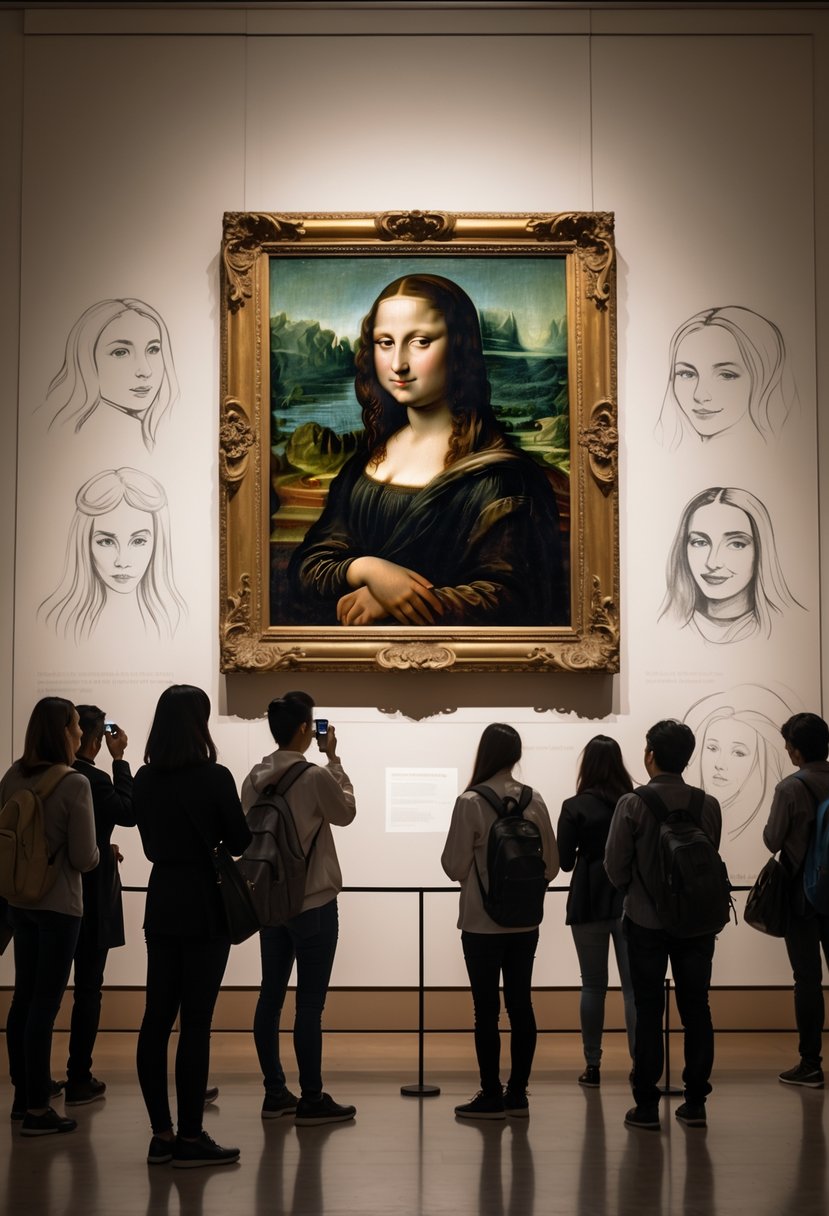
The Mona Lisa is more than just a painting; it is a symbol of art and culture that has shaped how people view Renaissance art and famous paintings. Its influence spans centuries and continues to inspire artists, historians, and viewers around the world.
From Masterpiece to Cultural Icon
The Mona Lisa is widely recognized as a masterpiece of Renaissance art. Painted by Leonardo da Vinci, it showcases advanced techniques, such as sfumato, which creates soft transitions between colors and tones. This skill contributed to its realistic and captivating appearance.
The painting became a cultural icon partly due to its theft in 1911, which brought global attention. Since then, it has been reproduced, parodied, and referenced in countless forms, from pop culture to serious art criticism. Its presence in the Louvre museum attracts millions of visitors yearly, making it one of the most famous paintings internationally.
Fascination Across Art History
Art historians emphasize the Mona Lisa’s role in shaping Western art history. It represents a shift during the Renaissance where artists focused on human expression, naturalism, and innovation. The painting’s detailed background and the subject’s gaze create an engaging and lifelike effect that was revolutionary for its time.
This fascination extends beyond technical achievements. The Mona Lisa has inspired many artists, influencing styles and artistic goals for generations. Its enduring appeal demonstrates how art can capture and maintain public interest over centuries.
Interpretations and Theories
The Mona Lisa has sparked many interpretations and theories. Scholars debate the identity of the woman, the meaning behind her smile, and the symbolism in the landscape. Some suggest the smile changes with the viewer’s perspective, an effect created by Leonardo’s technique.
Other theories focus on hidden elements, like possible coded messages or symbolic use of materials. These interpretations feed the painting’s mystique and keep interest alive among art historians and the public alike.
For more details on its history and impact, see this page on the Mona Lisa’s dark secrets and fame.
Journey Through Time: Theft, Vandalism, and Preservation
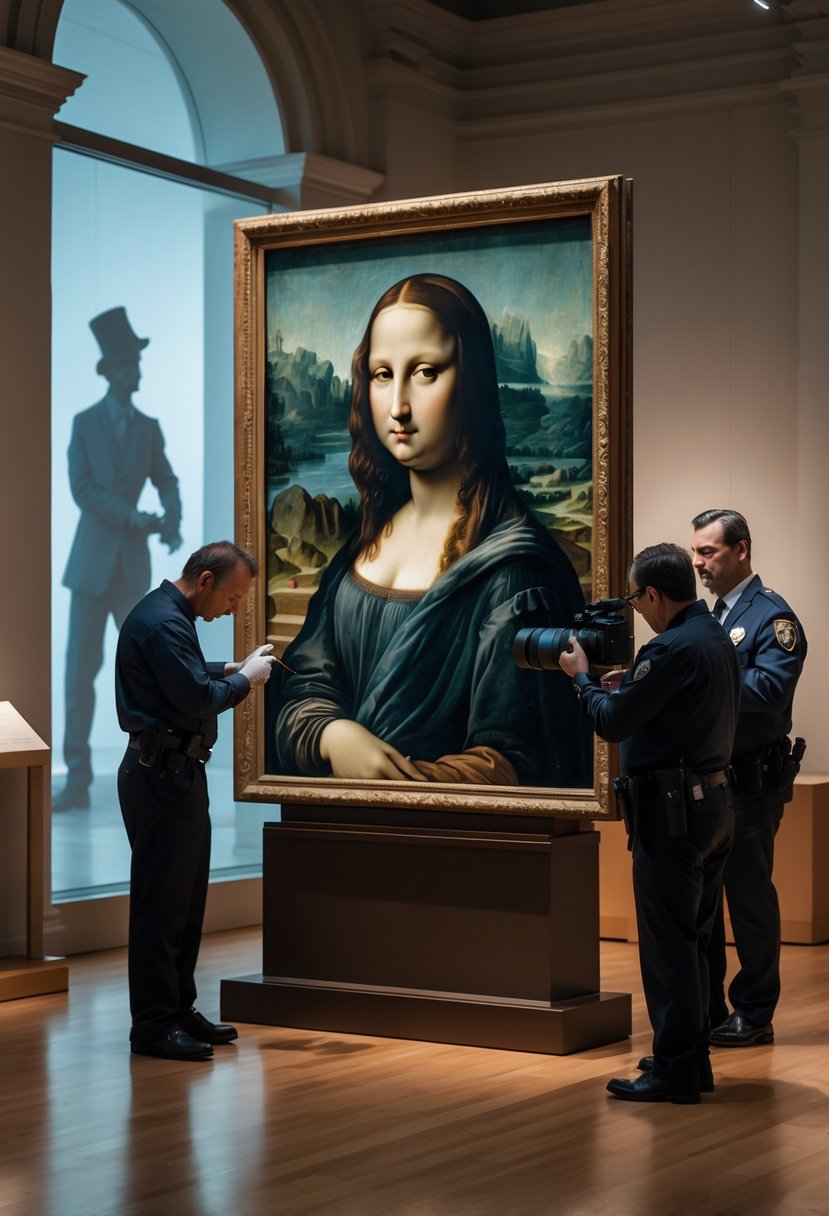
The Mona Lisa has faced serious challenges over the years, including theft and vandalism. Its preservation has involved advanced scientific methods and careful conservation to keep the painting safe and in good condition.
The Notorious Theft by Vincenzo Peruggia
In 1911, the Mona Lisa was stolen by Vincenzo Peruggia, an Italian handyman. He took the painting from the Louvre by hiding it under his clothes. Peruggia believed the artwork belonged in Italy and wanted to return it.
The theft shocked the world and made the painting even more famous. For two years, the painting was missing until Peruggia was caught trying to sell it in Italy. After it was recovered, the Mona Lisa was returned to the Louvre, now regarded as priceless.
Incidents of Vandalism and Protection
The Mona Lisa has been targeted several times by vandals. Some attacks involved throwing acid and even a rock, which caused minor damage protected by its resilient surface.
Because of these incidents, the painting is now secured behind bulletproof glass. This protection helps ensure its durability against future attacks and environmental harm while allowing visitors to view it safely.
Conservation, Plumbonacrite, and Scientific Advances
Scientific analysis has played a key role in protecting the Mona Lisa. Experts discovered that da Vinci used plumbonacrite, a lead oxide powder, in the paint that helps preserve the colors.
Modern conservation techniques regularly monitor the painting’s condition. These advances help maintain its original beauty and prevent deterioration caused by light, humidity, or pollution.
The Mona Lisa at the Louvre and its Global Reach
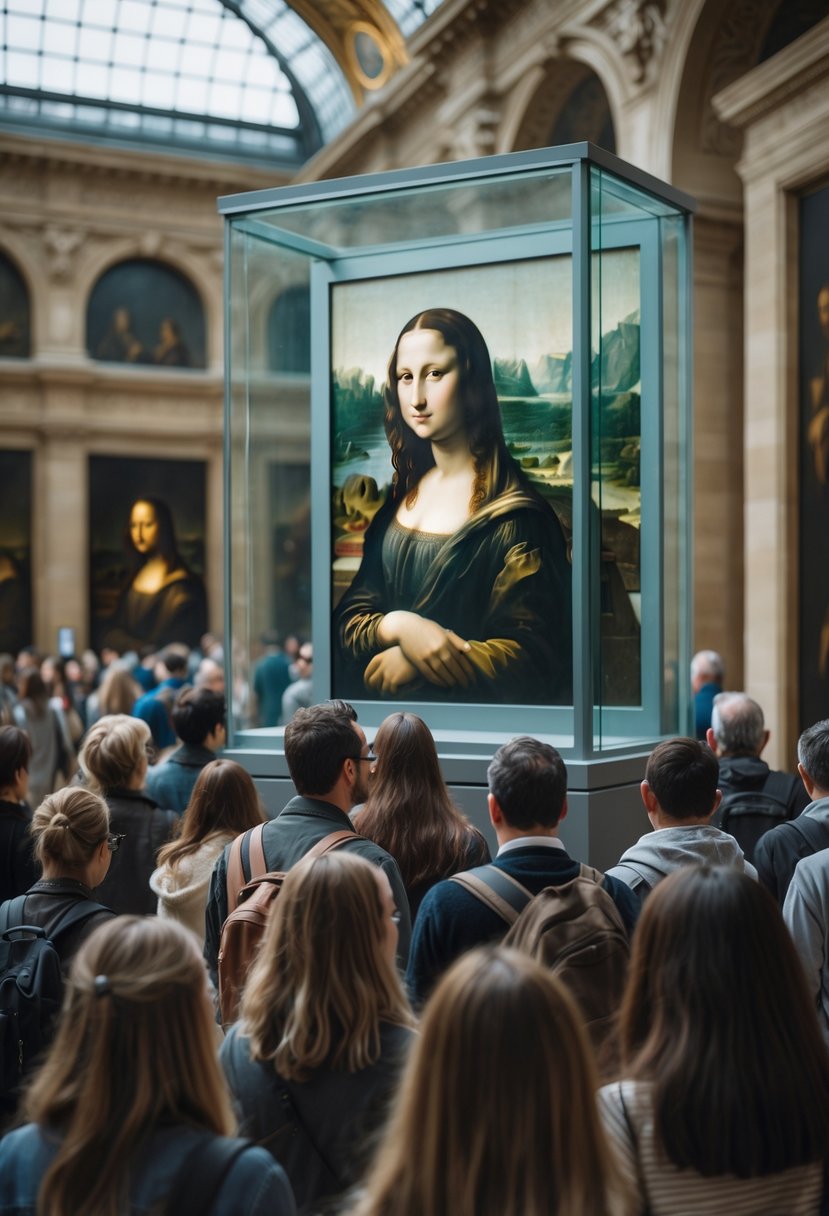
The Mona Lisa holds a unique place not only as an artistic masterpiece but also as a cultural symbol seen by millions each year. Its impact stretches from its home in Paris to global art and popular culture, influencing both tourism and modern media.
Display at the Louvre Museum
The Mona Lisa is housed in the Louvre Museum in Paris, one of the most visited museums worldwide. The painting is displayed in a specially designed, secure room to protect it from damage and overcrowding. About 20,000 to 30,000 visitors view the piece daily, making it the museum’s main attraction.
Recent plans include moving the artwork to its own dedicated space underground, to reduce congestion and preserve the climate around the painting. The Louvre’s renovation efforts, supported by the French government, aim to enhance the experience for visitors from all over the world while maintaining the painting’s safety and visibility.
Influence on France and International Recognition
The Mona Lisa symbolizes a significant part of France’s cultural heritage. It has helped solidify Paris as a global art capital. French presidents, including Emmanuel Macron, have emphasized the painting’s role in cultural diplomacy and tourism.
The work’s fame has attracted millions of visitors over the years, many inspired by its mysterious smile and artistic mastery. The painting’s presence at the Louvre has contributed to France’s image as a center of fine art. Even figures like Jackie Kennedy helped raise awareness of the painting’s cultural importance during visits.
Mona Lisa’s Role in Modern Pop Culture
Beyond museums, the Mona Lisa has appeared repeatedly in films, advertisements, and music videos, becoming a symbol in modern pop culture. Its image is often altered or parodied to comment on society or fashion.
Beyoncé and Jay-Z’s famous Louvre visit, captured standing in front of the painting, highlighted its ongoing influence. The artwork’s ability to maintain relevance over centuries shows its power not just as an old masterpiece but as a living cultural icon.
The painting inspires artists and creatives worldwide and remains part of global conversations about art, fame, and history.